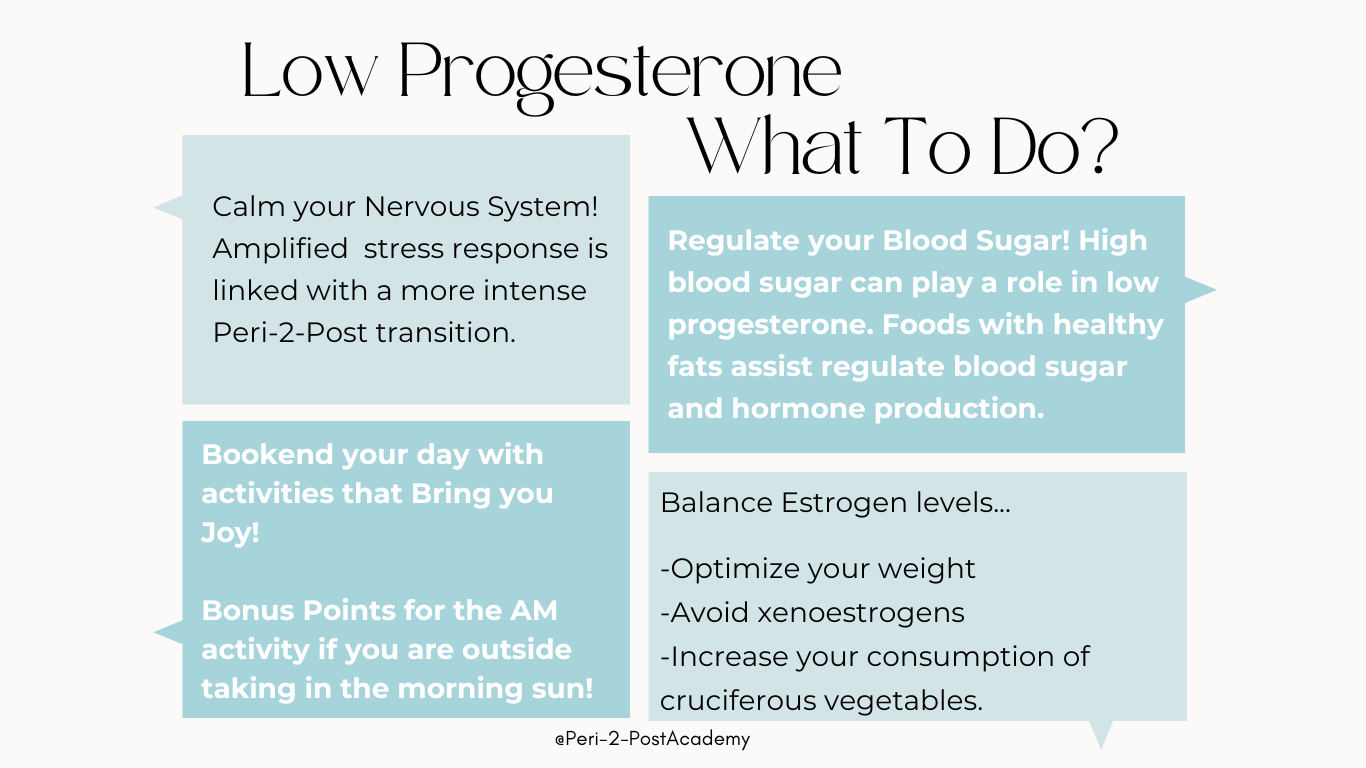
Early perimenopause is defined by declining progesterone — even while cycles may still appear regular.
Because ovulation becomes inconsistent, progesterone production drops. This shifts the estrogen-to-progesterone ratio and often drives anxiety, sleep disruption, heavier bleeding, and mood variability.
The goal in Stage 1 is not suppression.
It is restoration of balance.
Two primary strategies matter most:
- Nervous system regulation
- Estrogen modulation
1. Regulate the Nervous System First
Progesterone and stress physiology are deeply interconnected.
Chronic stress elevates cortisol. Elevated cortisol:
• Exacerbates anxiety and insomnia
• Disrupts ovulation
• Suppresses progesterone production
• Destabilizes mood
When stress is prolonged, the body prioritizes survival over reproduction.
The hypothalamus and pituitary redirect resources toward stress response rather than sex hormone production.
This is not dysfunction.
It is adaptive biology.
However, chronic stress can also:
• Reduce DHEA (a key adrenal hormone that becomes increasingly important post-menopause)
• Impair HPA axis communication
• Contribute to fatigue and metabolic dysregulation
Modern stressors are constant:
• Work demands
• Relationship conflict
• Financial strain
• Sleep deprivation
• Blood sugar instability
• Pain and inflammation
• Environmental toxin exposure
All of these register as stress to the brain.
And the brain responds accordingly.
Nervous System Support Strategies
Prioritize:
• Consistent sleep (non-negotiable)
• Morning light exposure
• Gentle strength training or yoga
• Meditation or breathwork
• Time in nature
• Reducing multitasking
• Structured time management
• Bookending your day with activities that bring calm
Even small daily shifts lower cortisol and support ovulatory stability.
Regulation precedes hormone repair.
2. Improve the Estrogen–Progesterone Ratio
In Stage 1, estrogen may still be adequate, but progesterone is declining.
This creates relative estrogen dominance.
Addressing this involves:
• Metabolic health
• Detoxification support
• Reducing endocrine disruptors
Optimize Metabolic Health
Fat tissue produces and stores estrogen.
When insulin resistance develops:
• Fat accumulation increases
• Estrogen recycling increases
• Inflammatory signaling rises
To support balance:
• Reduce refined carbohydrates
• Increase fiber
• Prioritize protein
• Include healthy fats
• Strength train regularly
Improving insulin sensitivity reduces excess circulating estrogen.
Reduce Xenoestrogen Exposure
Xenoestrogens mimic estrogen within the body.
They are found in:
• Plastics
• Pesticides
• Personal care products
• Cleaning supplies
Reduce exposure by:
• Using glass or stainless steel food containers
• Choosing fragrance-free or natural personal care products
• Limiting pesticide exposure when possible
Small environmental shifts matter over time.
Support Estrogen Detoxification
Estrogen metabolism occurs primarily in the liver and gut.
Poor detoxification may result from:
• Nutrient deficiencies
• Chronic stress
• Genetic predisposition
• Gut dysfunction
Support pathways with:
• Cruciferous vegetables (broccoli, cauliflower, Brussels sprouts)
• Adequate fiber intake
• Hydration
• Minimizing alcohol
Sulforaphane compounds in cruciferous vegetables support healthy estrogen metabolism.
The Stage 1 Big Picture
Early perimenopause is a progesterone story.
When ovulation becomes inconsistent, progesterone drops.
When progesterone drops, stress sensitivity rises.
When stress rises, ovulation becomes less stable.
This cycle can be interrupted.
But not with extremes.
Regulation.
Metabolic stability.
Environmental awareness.
Small, consistent changes restore steadiness.
Frequently Asked Questions About Stage 1 Perimenopause
Can stress really lower progesterone?
Yes. Chronic cortisol elevation disrupts ovulation and reduces progesterone production.
Is estrogen too high in early perimenopause?
Often estrogen is not excessively high, progesterone is simply lower, creating imbalance.
Will lifestyle changes really help?
In early perimenopause, lifestyle interventions can significantly influence ovulatory stability and symptom intensity.
Should I consider progesterone therapy?
This depends on individual evaluation. Hormone therapy may be appropriate in some cases.